
Mary Ryan Gallery at the ADAA Art Show 2024
ROY LICHTENSTEIN

Roy Lichtenstein
Water Lilies with Willows, 1992
Enamel on processed and swirled stainless steel with painted wood frame
58 x 104 3/16 inches (147.3 x 264.6 cm)
Edition of 23
Roy Lichtenstein
Water Lilies with Willows, 1992
Enamel on processed and swirled stainless steel with painted wood frame
58 x 104 3/16 inches (147.3 x 264.6 cm)
Edition of 23
Roy Lichtenstein was a great admirer of Claude Monet, whose famed water lily paintings provided the inspiration for Water Lilies with Willows, created through a unique process of screenprinting enamel on stainless steel. In 1986, he began working with Donald Saff, an artist and engineer running an innovative print studio. According to Saff, Lichtenstein was interested in executing a “play on the idea of movement and transformation that was so vital to Monet. … [Roy] wanted to use that process to deal with how Monet used water in a more physical manner, by doing something that would reflect and break up the light into spectral colors.”
ANDY WARHOL

Andy Warhol
Campbell's Soup I (Chicken Soup), c.1968
Silkscreen
Paper Dimensions: 35 x 23 inches (88.9 x 58.4 cm)
Framed Dimensions: 39 1/8 x 27 1/8 inches (99.4 x 68.9 cm)
Edition of 250
Andy Warhol
Campbell's Soup I (Chicken Soup), c.1968
Silkscreen
Paper Dimensions: 35 x 23 inches (88.9 x 58.4 cm)
Framed Dimensions: 39 1/8 x 27 1/8 inches (99.4 x 68.9 cm)
Edition of 250
Andy Warhol took the world by storm in 1962 with his series of Campbell’s Soup paintings, in which he elevated the humble can of soup, which could be found in any supermarket, into a fine work of art. In 1968, he revisited the theme with his Campbell’s Soup I silkscreen series, creating 10 different works depicting individual soup flavors, including the classic chicken noodle. Even more than the earlier series of paintings, the mechanical reproduction of the silkscreening process closely mirrored the mass production of food products in the United States. Warhol said, “The more you look at the same exact thing, the more the meaning goes away, and the better and emptier you feel.”
DONALD SULTAN
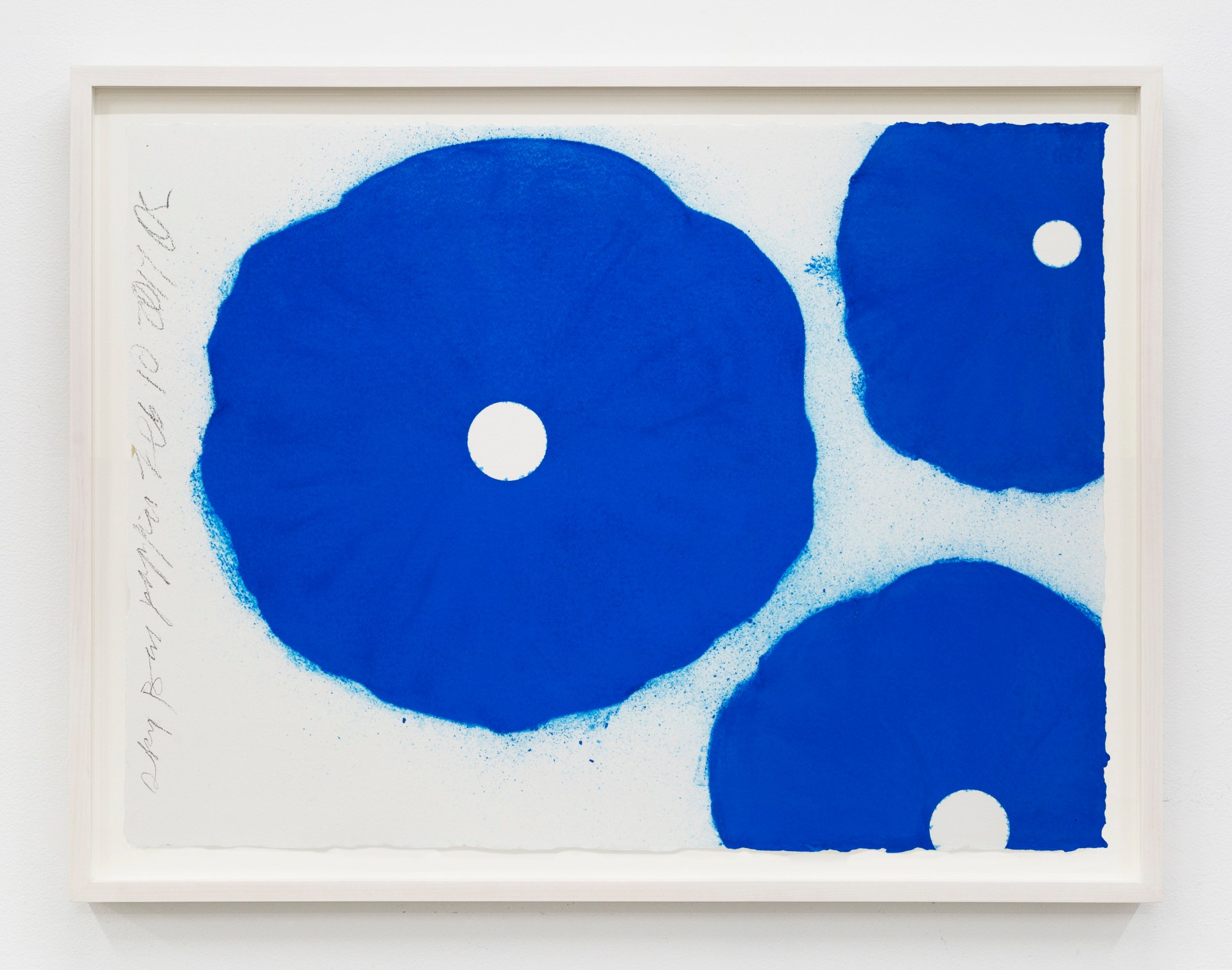
Donald Sultan
Sky Blue Poppies Feb 10 2017, 2017
Conté
Paper Dimensions: 22 1/2 x 30 inches (57.2 x 76.2 cm)
Framed Dimensions: 26 3/8 x 33 3/4 inches (67 x 85.7 cm)

Donald Sultan
Yellow Nov 8 2017, 2017
Conté
Paper Dimensions: 22 1/2 x 30 inches (57.2 x 76.2 cm)
Framed Dimensions: 26 3/8 x 33 3/4 inches (67 x 85.7 cm)
Donald Sultan
Sky Blue Poppies Feb 10 2017, 2017
Conté
Paper Dimensions: 22 1/2 x 30 inches (57.2 x 76.2 cm)
Framed Dimensions: 26 3/8 x 33 3/4 inches (67 x 85.7 cm)
Donald Sultan
Yellow Nov 8 2017, 2017
Conté
Paper Dimensions: 22 1/2 x 30 inches (57.2 x 76.2 cm)
Framed Dimensions: 26 3/8 x 33 3/4 inches (67 x 85.7 cm)
Donald Sultan is recognized for his inventive still lifes that move between realism and abstraction. In Sky Blue Poppies Feb 10 2017 and Yellow Nov 8 2017, Sultan revisits his iconic image of the poppy flower, inspired by Remembrance Day poppies worn on lapels to honor soldiers lost in World War I. Sultan takes these delicate and fragile flowers and makes them big and bold using thickly-applied, clay-like yellow or blue conté.

Donald Sultan
Mimosa May 30 2024, 2024
Conté and graphite
Paper Dimensions: 27 1/2 x 39 1/4 inches (69.9 x 99.7 cm)
Framed Dimensions: 35 1/4 x 47 3/16 inches (89.5 x 119.9 cm)

Donald Sultan
Spring Mimosas May 16 2024, 2024
Conté and graphite on paper
Paper Dimensions: 48 x 60 inches (121.9 x 152.4 cm)
Framed Dimensions: 58 x 70 inches (147.3 x 177.8 cm)
Donald Sultan
Mimosa May 30 2024, 2024
Conté and graphite
Paper Dimensions: 27 1/2 x 39 1/4 inches (69.9 x 99.7 cm)
Framed Dimensions: 35 1/4 x 47 3/16 inches (89.5 x 119.9 cm)
Donald Sultan
Spring Mimosas May 16 2024, 2024
Conté and graphite on paper
Paper Dimensions: 48 x 60 inches (121.9 x 152.4 cm)
Framed Dimensions: 58 x 70 inches (147.3 x 177.8 cm)
In Sultan’s most recent group of Mimosa drawings, the blossoms take center stage as the leaves are depicted more sparingly. In the language of flowers, the mimosa is a symbol of secret love. Sultan’s simplified florals are buoyant and festive, demonstrating a fresh take on his classic subject. Mimosas have captivated Sultan as a vehicle to explore geometric abstraction through portrayals of nature.
JULIE MEHRETU

Julie Mehretu
Corner of Lake and Minnehaha (blue), 2022
Screenprint
Image Dimensions: 47 x 37 inches (119.4 x 94 cm)
Paper Dimensions: 54 3/4 x 43 1/2 inches (139.1 x 110.5 cm)
Framed Dimensions: 57 3/4 x 46 1/2 inches (146.7 x 118.1 cm)
Edition of 45
Julie Mehretu
Corner of Lake and Minnehaha (blue), 2022
Screenprint
Image Dimensions: 47 x 37 inches (119.4 x 94 cm)
Paper Dimensions: 54 3/4 x 43 1/2 inches (139.1 x 110.5 cm)
Framed Dimensions: 57 3/4 x 46 1/2 inches (146.7 x 118.1 cm)
Edition of 45
Fascinated by the complex layers and interconnections of our world, Julie Mehretu is an artist whose work lends itself naturally to printmaking. In these three Corner of Lake and Minnehaha images, Mehretu screenprints three layers of energetic marks over a news photograph she cropped, flipped, blurred, and enlarged. Each layer is screenprinted using subtle variations of black, causing them to flow into one another as they emerge from Mehretu’s abstract, photographic ground.

Julie Mehretu
Corner of Lake and Minnehaha, 2022
Screenprint
Image Dimensions: 47 x 37 inches (119.4 x 94 cm)
Paper Dimensions: 54 3/4 x 43 1/2 inches (139.1 x 110.5 cm)
Framed Dimensions: 57 3/4 x 46 1/2 inches (146.7 x 118.1 cm)
Edition of 45
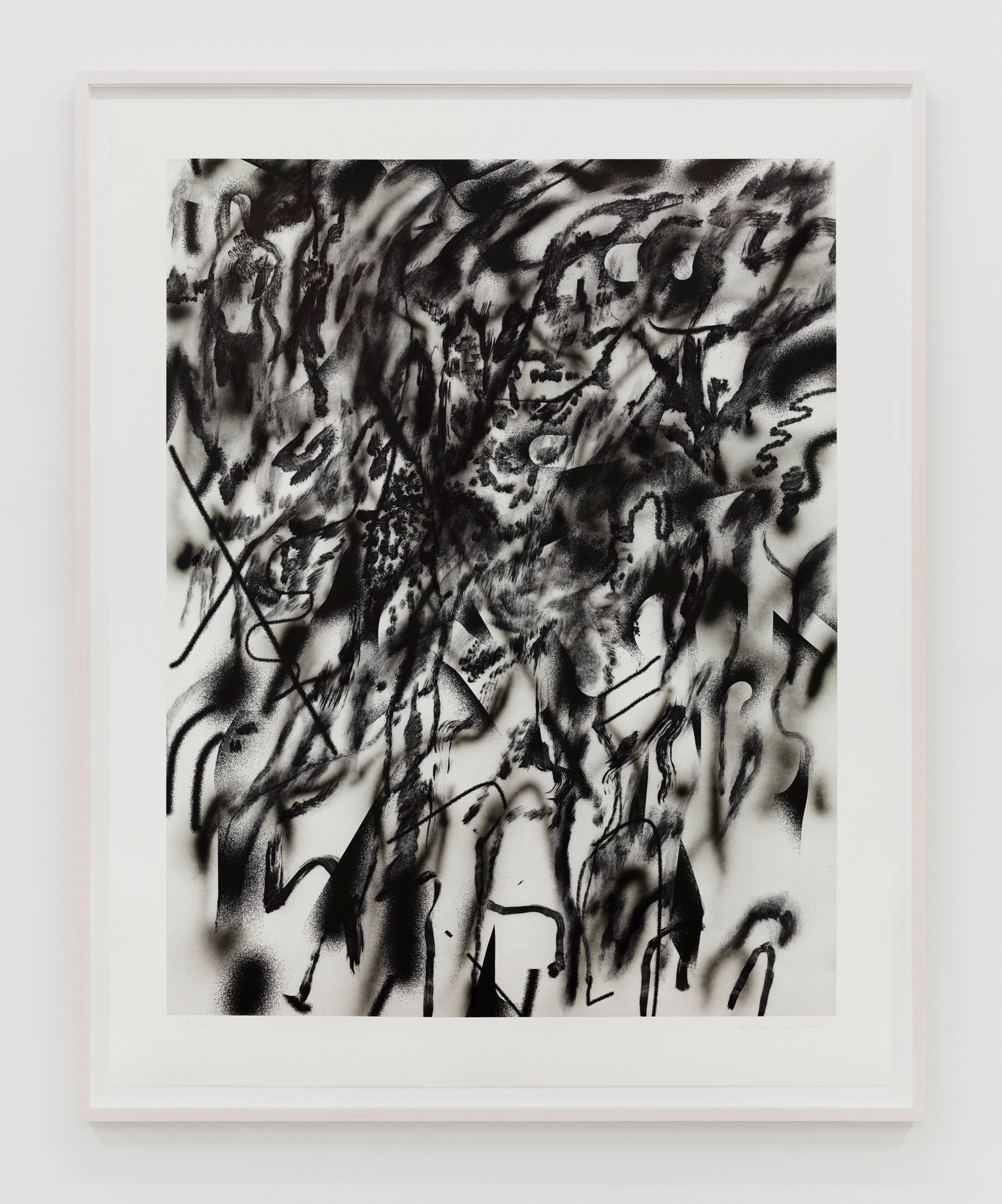
Julie Mehretu
Corner of Lake and Minnehaha (smoke), 2022
Screenprint
Image Dimensions: 47 x 37 inches (119.4 x 94 cm)
Paper Dimensions: 54 3/4 x 43 1/2 inches (139.1 x 110.5 cm)
Framed Dimensions: 57 3/4 x 46 1/2 inches (146.7 x 118.1 cm)
Edition of 45
Julie Mehretu
Corner of Lake and Minnehaha, 2022
Screenprint
Image Dimensions: 47 x 37 inches (119.4 x 94 cm)
Paper Dimensions: 54 3/4 x 43 1/2 inches (139.1 x 110.5 cm)
Framed Dimensions: 57 3/4 x 46 1/2 inches (146.7 x 118.1 cm)
Edition of 45
Julie Mehretu
Corner of Lake and Minnehaha (smoke), 2022
Screenprint
Image Dimensions: 47 x 37 inches (119.4 x 94 cm)
Paper Dimensions: 54 3/4 x 43 1/2 inches (139.1 x 110.5 cm)
Framed Dimensions: 57 3/4 x 46 1/2 inches (146.7 x 118.1 cm)
Edition of 45

Julie Mehretu
Achille (epoch), 2015
9-color aquatint with spit-bite
Image Dimensions: 24 3/4 x 39 3/4 inches (83.2 x 118.7 cm)
Paper Dimensions: 32 3/4 x 46 3/4 inches (83.2 x 118.7 cm)
Framed Dimensions: 35 1/2 x 49 1/2 inches (90.2 x 125.7 cm)
Edition of 60
Julie Mehretu
Achille (epoch), 2015
9-color aquatint with spit-bite
Image Dimensions: 24 3/4 x 39 3/4 inches (83.2 x 118.7 cm)
Paper Dimensions: 32 3/4 x 46 3/4 inches (83.2 x 118.7 cm)
Framed Dimensions: 35 1/2 x 49 1/2 inches (90.2 x 125.7 cm)
Edition of 60
ALEX KATZ
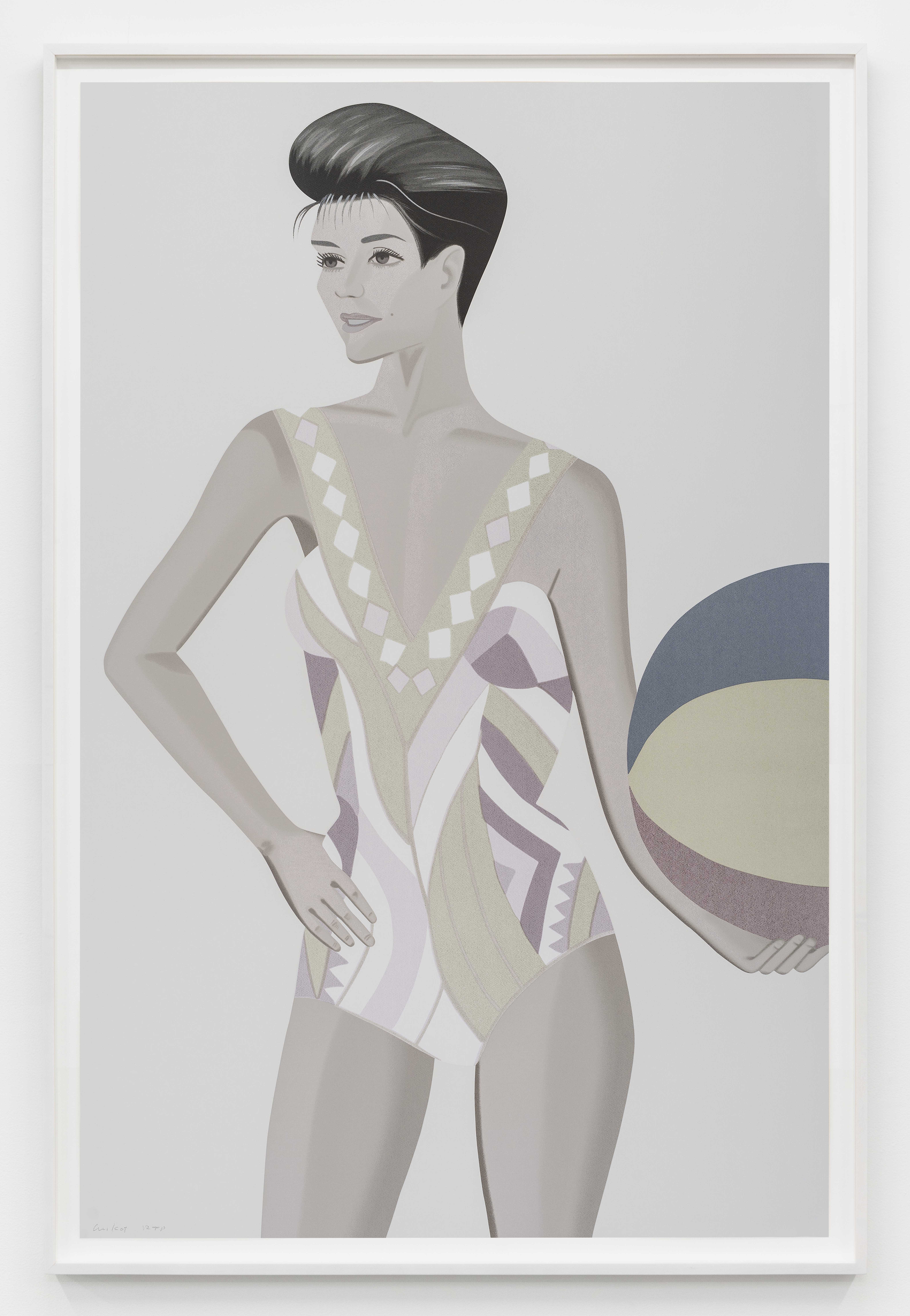
Alex Katz
Chance (Darinka), 2016
33 color silkscreen on Saunders Waterford White Cold Press 300 gsm fine art paper
Paper Dimensions: 70 x 46 inches (177.8 x 116.84 cm)
Framed Dimensions: 73 3/4 x 49 1/2 inches (187.3 x 125.7 cm)
Edition of 50
Alex Katz
Chance (Darinka), 2016
33 color silkscreen on Saunders Waterford White Cold Press 300 gsm fine art paper
Paper Dimensions: 70 x 46 inches (177.8 x 116.84 cm)
Framed Dimensions: 73 3/4 x 49 1/2 inches (187.3 x 125.7 cm)
Edition of 50
In the mid-1960s, Alex Katz began a prolific career in printmaking, producing more than 400 editions of lithographs, etchings, silkscreens, woodcuts, and linoleum cuts. Chance (Darinka) is a 33-color silkscreen, meticulously crafted in muted tones of gray, mauve, and pink. Wearing a stylish swimsuit, the figure is shown in a playful pose with a beachball. The polish of this print alludes to the slick style of fashion advertisements. The larger-than-life size of this work evokes a billboard. Katz said, “I love the scale of billboards, the romance of billboards, and the bluntness of them.”

Alex Katz
Ariel 2, 2021
Silkscreen
Image Dimensions: 60 x 37 inches (152.4 x 94 cm)
Framed Dimensions: 63 3/4 x 40 3/4 inches (161.9 x 103.5 cm)
Edition of 60
Alex Katz
Ariel 2, 2021
Silkscreen
Image Dimensions: 60 x 37 inches (152.4 x 94 cm)
Framed Dimensions: 63 3/4 x 40 3/4 inches (161.9 x 103.5 cm)
Edition of 60
Ariel 2 is part of a set of print portraits that portray Ariel Veith, one of Katz’s many muses in New York City. This silkscreen is striking in its visual simplicity; composed of smooth fields of peachy oranges, Katz uses a soft, reduced palette to achieve the graphic quality of his overall composition. In this work, Katz chose not to capture Ariel’s entire head, instead just a close-up image of her eyes, nose and lips. The tightly cropped composition lends the work a photographic spontaneity. A pioneer of Pop art, Katz frequently creates visually minimalistic, yet rhetorically enigmatic work. Ariel 2 is, as Katz explains, “an image that is so simple you can’t avoid it, and so complicated you can’t figure it out.”

Alex Katz
Black Dress 9 (Christy), 2015
Silkscreen
Paper Dimensions: 80 x 30 inches (203.2 x 76.2 cm)
Framed Dimensions: 83 3/4 x 33 3/4 inches (212.7 x 85.7 cm)
Edition of 35

Alex Katz
Olympic Swimmer, 1976
Silkscreen
Paper Dimensions: 40 x 24 7/8 inches (101.6 x 63.2 cm)
Edition of 200
Alex Katz
Black Dress 9 (Christy), 2015
Silkscreen
Paper Dimensions: 80 x 30 inches (203.2 x 76.2 cm)
Framed Dimensions: 83 3/4 x 33 3/4 inches (212.7 x 85.7 cm)
Edition of 35
Alex Katz
Olympic Swimmer, 1976
Silkscreen
Paper Dimensions: 40 x 24 7/8 inches (101.6 x 63.2 cm)
Edition of 200
YVONNE JACQUETTE

Yvonne Jacquette
Midtown Composite, 1997
Woodcut
Image Dimensions: 32 1/2 x 38 inches (82.6 x 96.5 cm)
Framed Dimensions: 36 1/4 x 41 1/2 inches (92.1 x 105.4 cm)
Edition of 50
Yvonne Jacquette
Midtown Composite, 1997
Woodcut
Image Dimensions: 32 1/2 x 38 inches (82.6 x 96.5 cm)
Framed Dimensions: 36 1/4 x 41 1/2 inches (92.1 x 105.4 cm)
Edition of 50
Yvonne Jacquette is known for her nocturnal cityscapes and breathtaking aerial perspectives, a subject matter that gripped her imagination for much of her career. The artist sharpened her signature bird’s eye perspective by chartering planes from New Jersey’s Teterboro Airport, working from the Empire State Building, and using empty office spaces and enclosed decks of the World Trade Center to create elevated views of the city.
JOAN MITCHELL
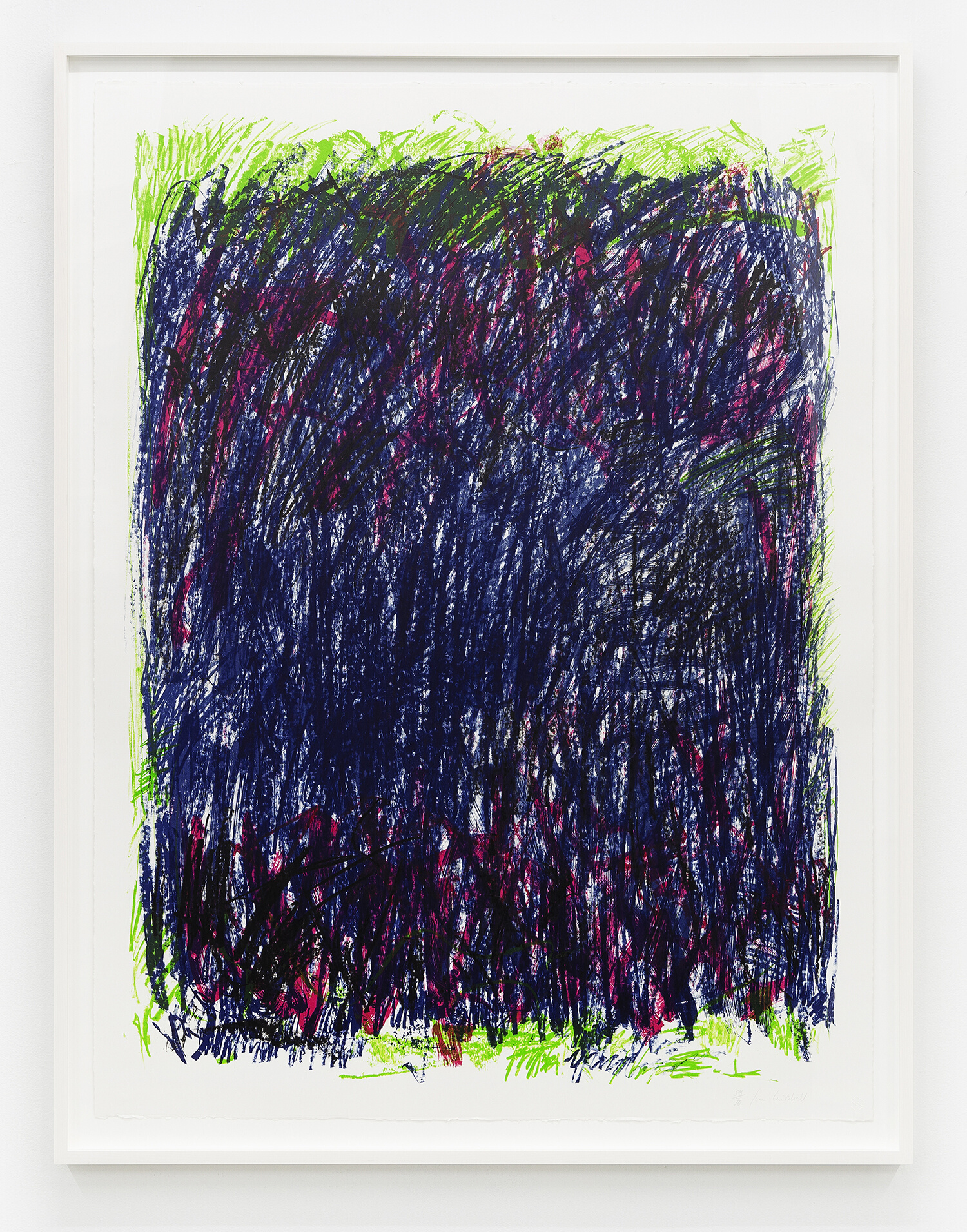
Joan Mitchell
Bedford II, 1981
Lithograph
Paper Dimensions: 42 1/2 x 32 1/2 inches (108 x 82.6 cm)
Framed Dimensions: 46 1/4 x 36 1/4 inches (117.5 x 92.1 cm)
Edition of 70
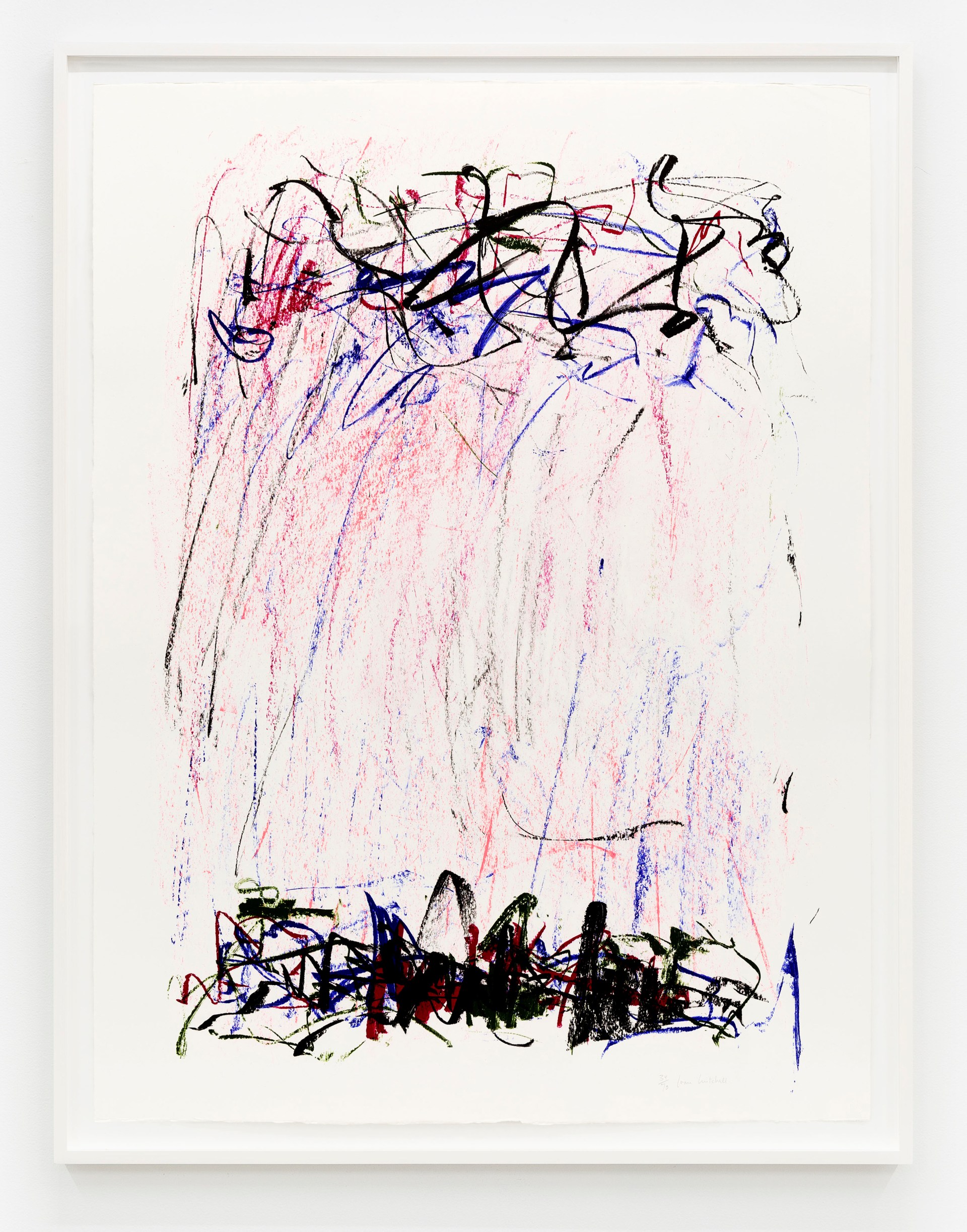
Joan Mitchell
Sides of a River I, 1981
Lithograph
Paper Dimensions: 42 1/2 x 32 1/2 inches (108 x 82.6 cm)
Framed Dimensions: 46 1/4 x 36 1/4 inches (117.5 x 92.1 cm)
Edition of 70
Joan Mitchell
Bedford II, 1981
Lithograph
Paper Dimensions: 42 1/2 x 32 1/2 inches (108 x 82.6 cm)
Framed Dimensions: 46 1/4 x 36 1/4 inches (117.5 x 92.1 cm)
Edition of 70
Joan Mitchell
Sides of a River I, 1981
Lithograph
Paper Dimensions: 42 1/2 x 32 1/2 inches (108 x 82.6 cm)
Framed Dimensions: 46 1/4 x 36 1/4 inches (117.5 x 92.1 cm)
Edition of 70
Known for her strong gestural style, Joan Mitchell was fundamental to the Abstract Expressionist period in the United States, although she spent much of her career in France. She was influenced by nature and landscapes, and her emotion-laden abstractions are highly expressive and often spontaneous.
Both the Sides of a River and Bedford series were printed at Tyler Graphics with master printer Ken Tyler. She traveled to his studio in Bedford, NY in 1981, following his encouragement that her painterly vision could be translated to lithography. Mitchell didn’t make many large-scale color prints, and these works stand as masterful examples of the adaptation of her abstract expressionist gestures into printmaking.
LORNA SIMPSON

Lorna Simpson
Double Portrait, 2013
Silkscreen on two felt panels
Paper Dimensions: 34 1/2 x 20 inches (87.6 x 50.8 cm) each
Framed Dimensions: 38 3/4 x 24 1/4 inches (98.4 x 61.6 cm) each
38 3/4 x 49 1/2 inches (87.6 x 101.6 cm) overall
Edition of 27
Lorna Simpson
Double Portrait, 2013
Silkscreen on two felt panels
Paper Dimensions: 34 1/2 x 20 inches (87.6 x 50.8 cm) each
Framed Dimensions: 38 3/4 x 24 1/4 inches (98.4 x 61.6 cm) each
38 3/4 x 49 1/2 inches (87.6 x 101.6 cm) overall
Edition of 27
Lorna Simpson’s Double Portrait, a silkscreen print on two felt panels, is a continuation of the artist’s collage series based on advertisements found in Ebony and Jet magazines from the 1930s through 1970s. Simpson regards these publications as important archives of American life. In the work, the portraits of two women taken from an Ebony advertisement make reference to the before and after shots found in many magazines of the time. In the ad, the women act out two different emotional states, much in the way that performers bring characters to life on stage. Double Portrait is the first work from this collage series to be printed on felt, a material which the artist has experimented with since the mid-1990s.
KARA WALKER
Kara Walker
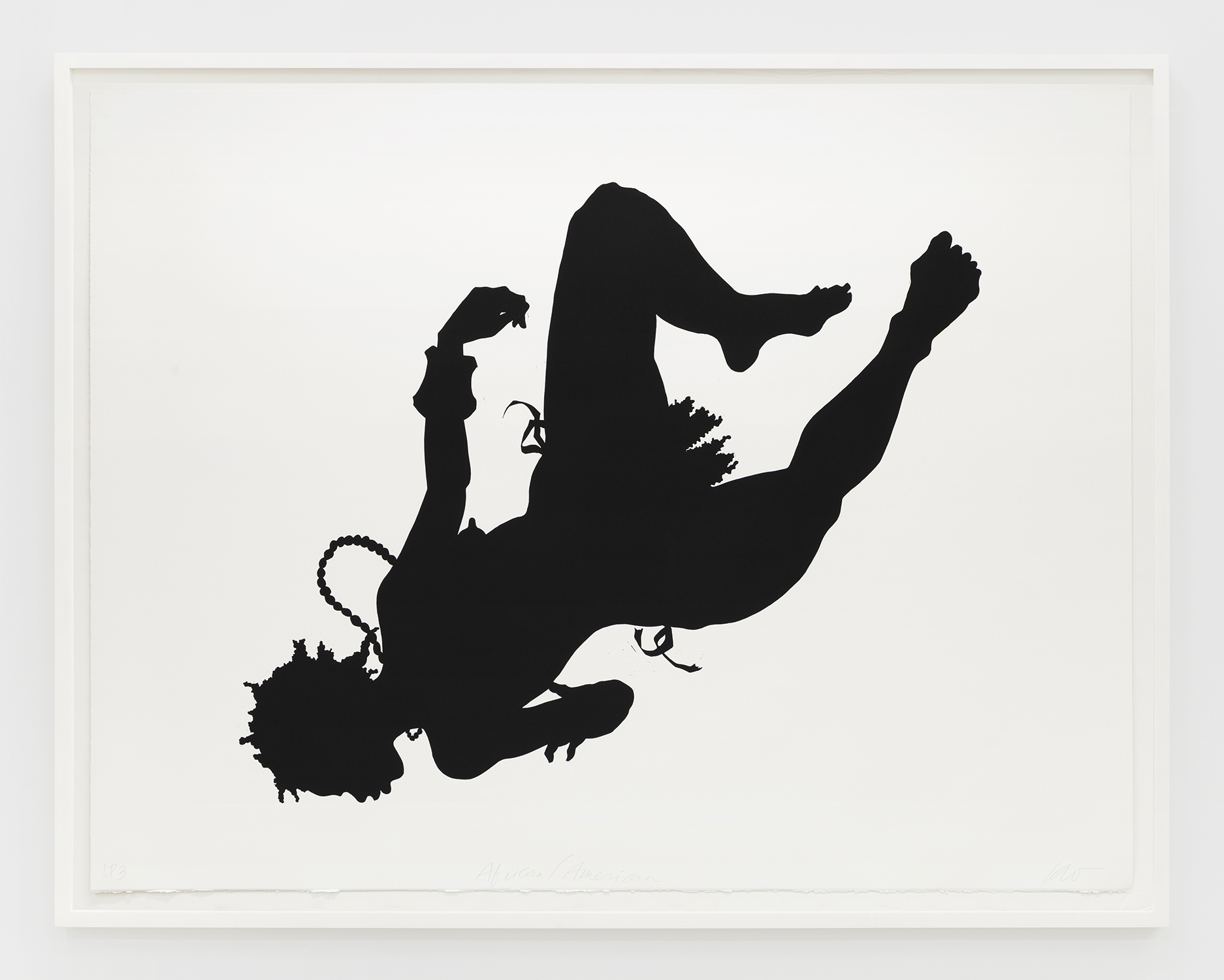
African/American, 1998
Linocut
Paper Dimensions: 46 x 60 1/2 inches (116.8 x 153.7 cm)
Framed Dimensions: 50 1/2 x 65 inches (128.3 x 165.1 cm)
Edition of 40
Kara Walker
African/American, 1998
Linocut
Paper Dimensions: 46 x 60 1/2 inches (116.8 x 153.7 cm)
Framed Dimensions: 50 1/2 x 65 inches (128.3 x 165.1 cm)
Edition of 40
Kara Walker is known for subverting traditional art historical subjects and replacing them with African American narratives. In her prints and paintings of contorted black silhouettes, Walker confronts her viewers with the violent history of slavery in America and the enduring relevance of its memory today.
To create her silhouettes, Walker reprises the tradition of shadow portraits that rose in popularity in the Antebellum and Victorian eras and applies them to the realities of slavery, thus reframing the narrative to showcase the graphic truths of this grim chapter in American history. In African/American, Walker describes the shackled figure tumbling through history as “your essentialist-token slave maiden in midair.”
KIKI SMITH

Kiki Smith
Pool of Tears 2, 2000
Etching, aquatint, drypoint, and sanding with watercolor
Image Dimensions: 47 3/4 x 71 11/16 inches (121.3 x 182.1 cm)
Paper Dimensions: 51 x 74 3/4 inches (129.5 x 189.9 cm)
Framed Dimensions: 54 1/2 x 78 1/4 inches (138.4 x 198.8 cm)
Edition of 29

Kiki Smith
Untitled (Hair), 1990
Lithograph on handmade paper
Paper Dimensions: 35 3/4 x 36 inches (90.8 x 91.4 cm)
Edition of 54
Kiki Smith
Pool of Tears 2, 2000
Etching, aquatint, drypoint, and sanding with watercolor
Image Dimensions: 47 3/4 x 71 11/16 inches (121.3 x 182.1 cm)
Paper Dimensions: 51 x 74 3/4 inches (129.5 x 189.9 cm)
Framed Dimensions: 54 1/2 x 78 1/4 inches (138.4 x 198.8 cm)
Edition of 29
Kiki Smith
Untitled (Hair), 1990
Lithograph on handmade paper
Paper Dimensions: 35 3/4 x 36 inches (90.8 x 91.4 cm)
Edition of 54
Known primarily for her sculpture and works on paper, Kiki Smith is a wildly experimental and innovative printmaker. For the massive print Pool of Tears 2, Smith was inspired by Lewis Carroll’s drawings for his own manuscript Alice’s Adventures Under Ground (the published book contained illustrations by Sir John Tenniel), as well as encyclopedia images of animals and birds. In this scene from the book, Alice has been shrunken down and has fallen into a pool of her own tears. Smith used the largest etching plate that the studio, Universal Limited Art Editions (ULAE), could accommodate. This hand-colored work touches on themes of childhood fantasies and fears.
Untitled (Hair) is Smith’s first lithograph and was also created at ULAE. Smith said, “At ULAE … I’m starting to use myself. Maybe because prints are this other world – they’re a secret entrance into using myself as a subject … I’ve been much more self-revealing in doing prints.” Produced by Smith in 1990, this radical print uses imprints and photocopies of the artist’s own hair, face, neck, and even a Cher wig, to create a nebulous composition infused with motion and dynamism. One of the first prints in which Smith used her own body as a part of the printmaking process, Untitled (Hair) demonstrates her inventive approach when tackling themes of the human body, natural world, and personhood.
MAIRA KALMAN
Maira Kalman
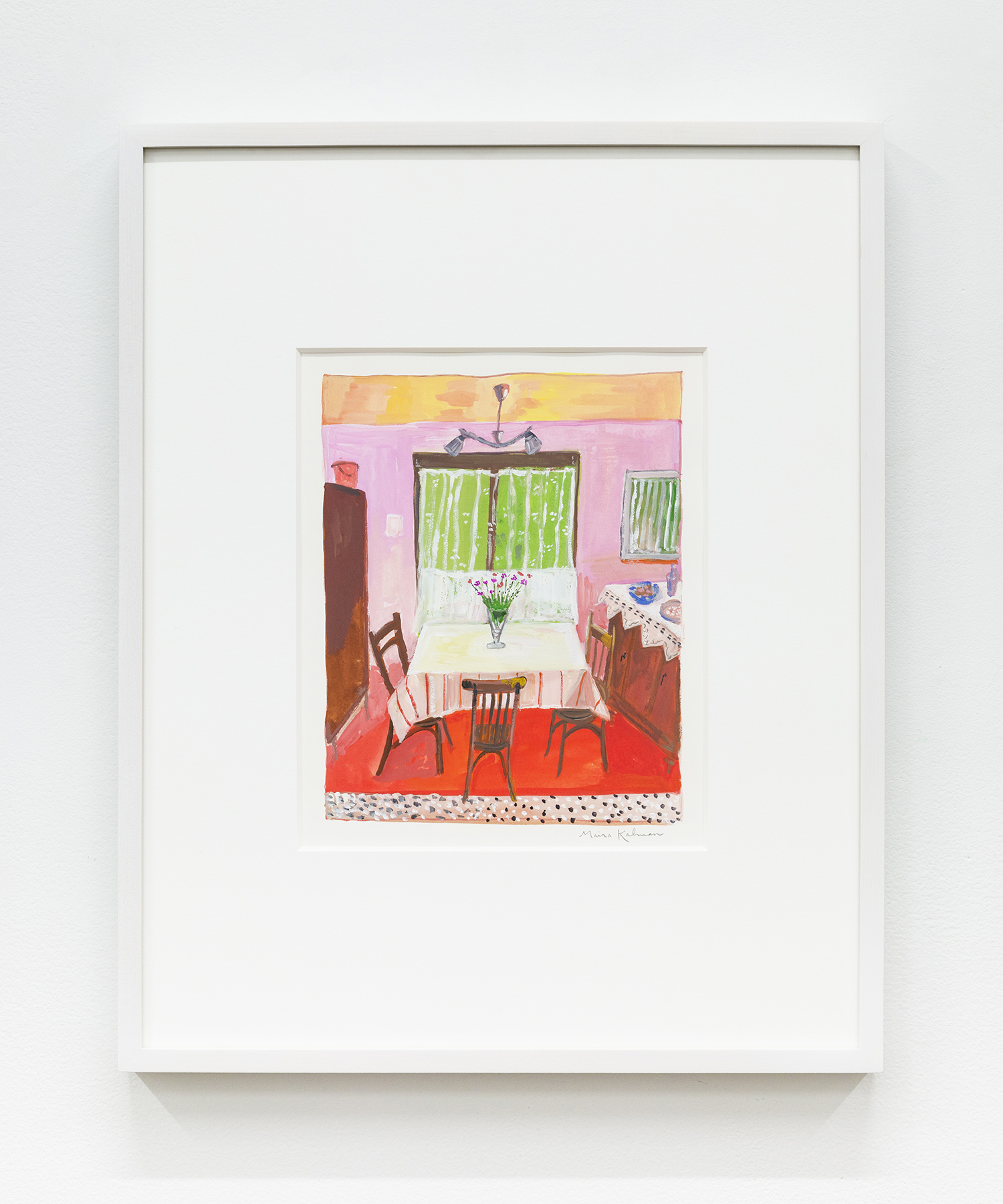
Dining Room, 2023
Gouache
Image Dimensions: 9 1/2 x 7 1/2 inches (24.1 x 19.1 cm)
Paper Dimensions: 15 1/8 x 11 1/2 inches (38.4 x 29.2 cm)
Framed Dimensions: 20 x 16 inches (50.8 x 40.6 cm)
Maira Kalman
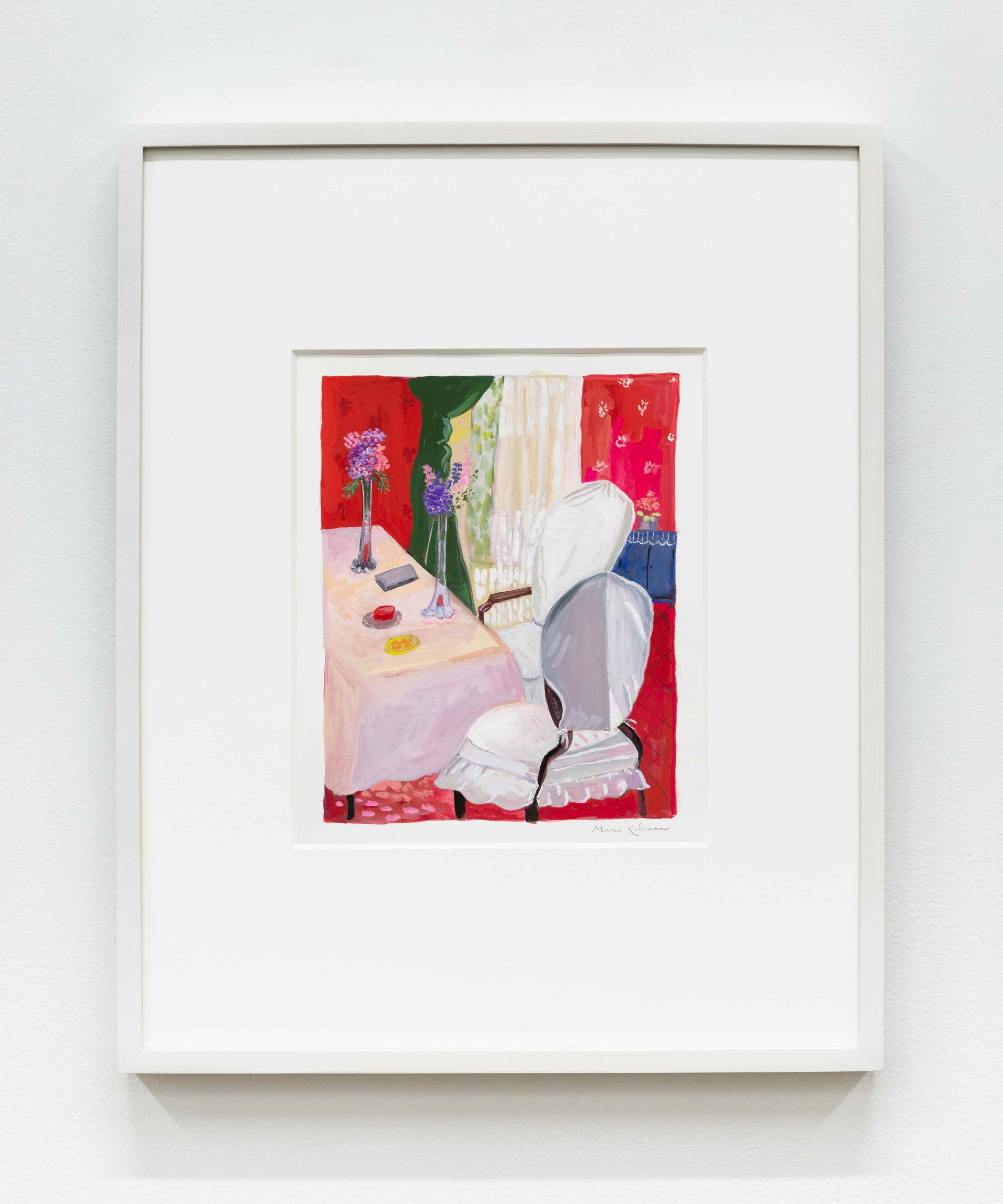
Two White Chairs, 2023
Gouache
Image Dimensions: 9 1/2 x 7 1/2 inches (24.1 x 19.1 cm)
Paper Dimensions: 15 x 11 inches (38.1 x 27.9 cm)
Framed Dimensions: 20 x 16 inches (50.8 x 40.6 cm)
Maira Kalman
Dining Room, 2023
Gouache
Image Dimensions: 9 1/2 x 7 1/2 inches (24.1 x 19.1 cm)
Paper Dimensions: 15 1/8 x 11 1/2 inches (38.4 x 29.2 cm)
Framed Dimensions: 20 x 16 inches (50.8 x 40.6 cm)
Maira Kalman
Two White Chairs, 2023
Gouache
Image Dimensions: 9 1/2 x 7 1/2 inches (24.1 x 19.1 cm)
Paper Dimensions: 15 x 11 inches (38.1 x 27.9 cm)
Framed Dimensions: 20 x 16 inches (50.8 x 40.6 cm)
Maira Kalman is an artist, author, and designer known for her playful and witty illustrations, which have been published in The New York Times, the New Yorker, and her own bestselling books. Kalman’s irreverent style – at times humorous and at others bittersweet – captures the beauties and banalities of modern life.
On a recent trip to Paris, Kalman was inspired by seeing the still lifes of Jean Siméon Chardin – his works also center on domestic, everyday scenes and convey a strong sense of mood. Kalman’s focus on the still life genre in this latest body of work, Still Life with Remorse, allows for a study of the ways in which objects can hold emotion and tell stories, even if they are ordinary items arranged together. The works shown here are both interior scenes that demonstrate Kalman’s expert use of color. In Dining Room, a soft wash of sunset colors on the back wall contrasts with the vibrant red of the carpet. Two White Chairs pairs pale white and pink fabric with strong red walls and floors, anchoring the composition with touches of forest green and royal blue.
An exhibition of Kalman’s paintings is on view until November 30 at Mary Ryan Gallery in Chelsea.
JEAN DE BRUNHOFF

Jean de Brunhoff
Study for "After having pedalled several miles, he finds a pleasant spot and decides to rest." from Babar and his Children, 1938
Ink and graphite
Image Dimensions: 6 x 8 inches (15.2 x 20.3 cm)
Paper Dimensions: 9 x 10 5/8 inches (22.9 x 27 cm)
Framed Dimensions: 14 1/4 x 16 5/8 inches (36.2 x 42.2 cm)
Jean de Brunhoff
Study for "After having pedalled several miles, he finds a pleasant spot and decides to rest." from Babar and his Children, 1938
Ink and graphite
Image Dimensions: 6 x 8 inches (15.2 x 20.3 cm)
Paper Dimensions: 9 x 10 5/8 inches (22.9 x 27 cm)
Framed Dimensions: 14 1/4 x 16 5/8 inches (36.2 x 42.2 cm)
Author/illustrator Jean de Brunhoff created the Babar books, which quickly became popular and have been in continuous publication since 1931. The Babar books began as a bedtime story that Jean’s wife Cécile de Brunhoff invented for their children, Mathieu, Thierry, and Laurent. The boys liked the story of the little elephant who left the jungle for a city resembling Paris so much so that they took it to their father, a skilled painter of portraits and landscapes, and asked him to illustrate it. Jean turned it into a picture book, with text, which became The Story of Babar. Six more titles followed before Jean de Brunhoff died of tuberculosis at the age of 37.
All of the original illustrations and related materials for 6 of the 7 Jean de Brunhoff books (published 1931-1938) are in museum collections including the Morgan Library, NY; Houghton Library, Harvard University, MA; the Lucas Museum of Narrative Art, CA; and the Bibliothèque Nationale de France, Paris.
As most of Jean de Brunhoff’s Babar illustrations are already in museums, these are among the few available Jean de Brunhoff Babar illustrations, and were originally published in Babar and His Children in 1938. In this book, the triplets (Pom, Alexander, and Flora) make their first appearance.
Study for “After having pedalled several miles, he finds a pleasant spot and decides to rest,” from Babar and His Children, shows a bicycle ride that Babar takes to distract himself from the nerves of waiting for Celeste to give birth. Three small rabbits watch as the elephant pedals down the steep path.
Jean de Brunhoff
"She smiles and proudly shows him three little baby elephants." published in Babar and his Children, 1937
Ink and gouache
Image Dimensions: 6 3/8 x 9 inches (16.2 x 22.9 cm)
Paper Dimensions: 7 7/8 x 10 5/8 inches (20 x 27 cm)
Framed Dimensions: 14 1/4 x 16 5/8 inches (36.2 x 42.2 cm)

Jean de Brunhoff
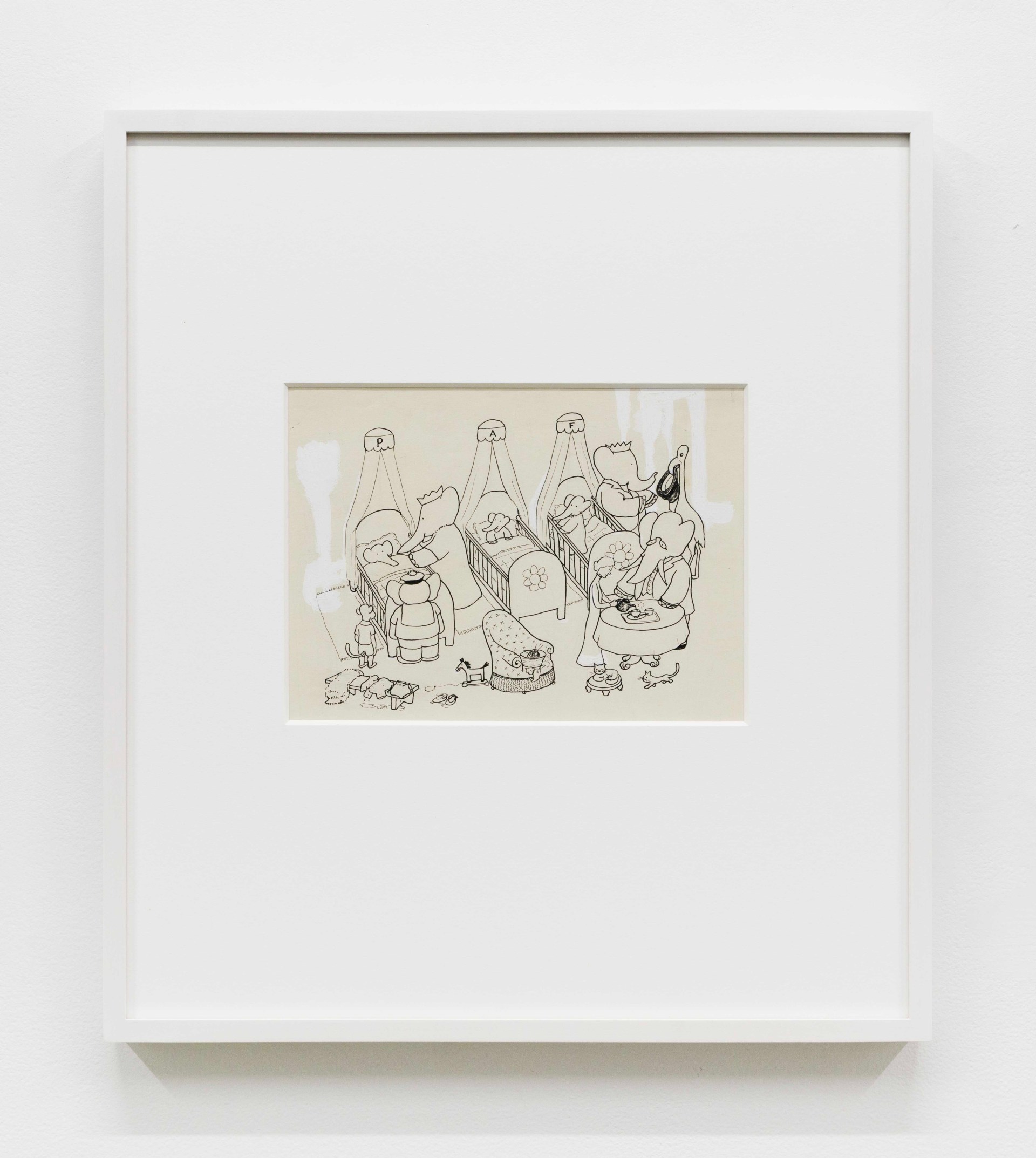
"Alexander kisses his Mama happily." published in Babar and his Children, 1937
Ink and gouache
Image Dimensions: 10 1/4 x 10 1/2 inches (26 x 26.7 cm)
Paper Dimensions: 14 1/8 x 10 5/8 inches (35.9 x 27 cm)
Framed Dimensions: 16 x 20 inches (40.6 x 50.8 cm)
Jean de Brunhoff
"She smiles and proudly shows him three little baby elephants." published in Babar and his Children, 1937
Ink and gouache
Image Dimensions: 6 3/8 x 9 inches (16.2 x 22.9 cm)
Paper Dimensions: 7 7/8 x 10 5/8 inches (20 x 27 cm)
Framed Dimensions: 14 1/4 x 16 5/8 inches (36.2 x 42.2 cm)
Jean de Brunhoff
"Alexander kisses his Mama happily." published in Babar and his Children, 1937
Ink and gouache
Image Dimensions: 10 1/4 x 10 1/2 inches (26 x 26.7 cm)
Paper Dimensions: 14 1/8 x 10 5/8 inches (35.9 x 27 cm)
Framed Dimensions: 16 x 20 inches (40.6 x 50.8 cm)
She smiles and proudly shows him three little baby elephants, also from Babar and His Children, shows the moment that Babar first meets the triplets after their birth. Babar and Celeste were only expecting one baby, so the arrival of triplets came as quite a surprise. The Old Lady is shown holding one of the baby elephants, while the nurse holds the other two. Babar leans toward Celeste attentively.
Later in the book, de Brunhoff shows us the mischief that the triplets get into as young children. Alexander seems to be the most rambunctious. Alexander kisses his Mama happily depicts Celeste tucking Alexander into bed after his adventurous tumble in the river. This drawing portrays a host of characters from the Babar universe: Zephir the monkey and Cousin Arthur look on at the foot of the bed, while the Old Lady pours tea for Cornelius. Cats, toys, and wet clothing add to the comforting and familiar disarray of a nursery scene.
LAURENT DE BRUNHOFF

Laurent de Brunhoff
"Each cafe is different." published in Babar's Guide to Paris, 2017
Watercolor, ink and graphite
Image Dimensions: 12 1/2 x 8 1/2 inches (31.8 x 21.6 cm)
Paper Dimensions: 15 x 11 1/8 inches (38.1 x 28.3 cm)
Framed Dimensions: 20 1/2 x 18 1/4 inches (52.1 x 46.4 cm)
Laurent de Brunhoff
"Each cafe is different." published in Babar's Guide to Paris, 2017
Watercolor, ink and graphite
Image Dimensions: 12 1/2 x 8 1/2 inches (31.8 x 21.6 cm)
Paper Dimensions: 15 x 11 1/8 inches (38.1 x 28.3 cm)
Framed Dimensions: 20 1/2 x 18 1/4 inches (52.1 x 46.4 cm)
Laurent de Brunhoff was the author and illustrator of over 60 Babar books. At just thirteen years old, Laurent made his first Babar illustration for the cover of his late father Jean de Brunhoff’s final Babar book. Laurent returned to Babar in 1946, and in the nearly eight decades since, his love for Babar, his art, and family stories have touched millions across the globe.
In the catalog for his first exhibition at Mary Ryan Gallery in 1987, Laurent wrote, “I make each page of my book like a painting, with its own organization, rhythm, and color harmony. From these notes I work and dream, going, as children do, from the real to the imaginary.”
Laurent trained as an abstract painter in the 1950s, and this is reflected in his colorful and expressive Babar drawings. His last Babar book was Babar’s Guide to Paris (2017) – a fitting return to the city where Laurent was born for his final Babar story – which is where Each Café is Different was published. This work depicts a lovely outdoor Parisian cafe complete with an elephant waiter carrying a tray of drinks.
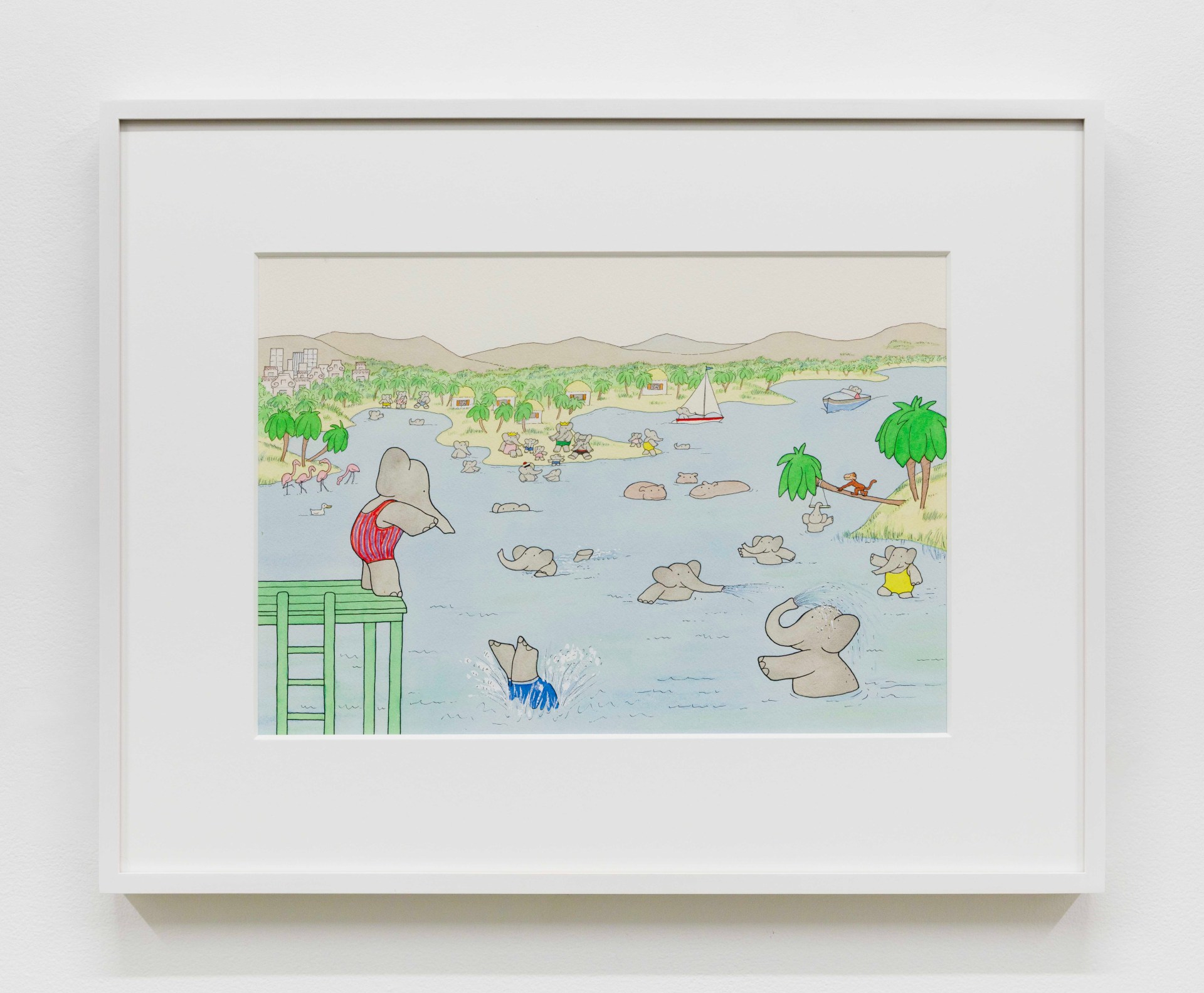
How beautiful the lake is now! is an example of a full double spread illustration, from Babar’s Battle (1992). In the foreground, we see elephants diving into the lake and spraying water with their trunks. In the middle ground, we have a rare view of the entire family: Babar and Celeste sit on the shore in bathing suits with crowns along with Cornelius and the triplets Pom, Alexander, and Flora. Cousin Arthur is swimming with his hat on. Charming illustrations of flamingos, hippos, and a monkey are scattered throughout the composition, and Celesteville is visible in the background.

Laurent de Brunhoff
"Babar, the King of the elephants, was taking his youngest child, Isabelle, on a camping trip" published in The Rescue of Babar, c. 1993
Watercolor, ink and graphite
Image Dimensions: 8 x 7 5/8 inches (20.3 x 19.4 cm)
Paper Dimensions: 15 x 10.98 inches (38.1 x 27.9 cm)
Framed Dimensions: 20 x 16 inches (50.8 x 40.6 cm)
Laurent de Brunhoff
"How beautiful the lake is now! It seems even more beautiful than before..." published in Babar's Battle, 1992
Watercolor, ink and gouache
Image Dimensions: 12 1/2 x 17 1/2 inches (31.8 x 44.5 cm)
Paper Dimensions: 15 1/8 x 22 1/2 inches (38.4 x 57.2 cm)
Framed Dimensions: 20 1/8 x 25 1/2 inches (51.1 x 64.8 cm)
Laurent de Brunhoff
"Babar, the King of the elephants, was taking his youngest child, Isabelle, on a camping trip" published in The Rescue of Babar, c. 1993
Watercolor, ink and graphite
Image Dimensions: 8 x 7 5/8 inches (20.3 x 19.4 cm)
Paper Dimensions: 15 x 10.98 inches (38.1 x 27.9 cm)
Framed Dimensions: 20 x 16 inches (50.8 x 40.6 cm)
Laurent de Brunhoff
"How beautiful the lake is now! It seems even more beautiful than before..." published in Babar's Battle, 1992
Watercolor, ink and gouache
Image Dimensions: 12 1/2 x 17 1/2 inches (31.8 x 44.5 cm)
Paper Dimensions: 15 1/8 x 22 1/2 inches (38.4 x 57.2 cm)
Framed Dimensions: 20 1/8 x 25 1/2 inches (51.1 x 64.8 cm)
Babar, the King of the elephants, was taking his youngest child, Isabelle, on a camping trip from The Rescue of Babar (1993) shows Babar and Isabelle setting off on an adventure together. Little do they know that on this trip, Babar will be kidnapped and Isabelle will go on a journey to rescue him.